Point
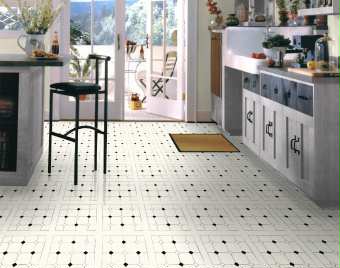
A point is a single position, usually presented by a dot, in a design. A point doesn't "go anywhere" like a line, or appear to have movement. It's a very stationary element.
 | |||
| http://www.e-maildir.com/a-wide-variety-of-styles-of-flooring.html |
The tile floor in this image is a great example of point. Each little black tile on the floor represents a point. The tile itself is not leading to a different location, it is simply representing a small spot on the flooring. While the floor as a whole has many "points" that work together to make the design and move the eye across the room, the individual points stand alone.
Line
Line is the connection of two points with some sort of media, in the case of interiors, it's often the materials used to make furniture. Therefore, lines move the eye from one place to another. Different types of line evoke different emotions. For example, a horizontal line represents peace and rest while a zig-zag line creates energy and lots of movement. In Victorian style homes, curvy lines bring elegance and luxury to the interiors.
 |
| http://www.hgtv.com/decorating-basics/8-elegant-victorian-style-dining-room-designs/pictures/index.html |
Shape and Plane
Lines are generated from the connection of two points and shapes are generated from the connection of lines. Planes are the "faces" of objects that are made of shapes. Just like lines, different shapes bring a different feel to a room. For example, a room filled with rectangular shapes feels more serious than a room of circular shapes.
 |
| http://www.hgtv.com/living-rooms/our-favorite-color-infused-living-rooms/pictures/index.html |
Form and Mass
Mass refers to the density of an object, or in this case, the furniture. Pieces that appear heavy in mass often fill the room much more than a piece that is hollow or smaller. This is useful when trying to fill a large space on a budget or when trying to utilize a smaller space.
 |
| http://www.hgtv.com/decorating-basics/small-space-solutions-for-the-kitchen-and-living-room/pictures/index.html |
Space and Volume
In layman terms, space the area of a room that is available to use. There are two types of space, positive and negative space. Positive space is where objects are placed and negative space is the empty areas around those objects.
 | |
| http://www.hgtv.com/bathrooms/high-end-bathroom-tile-designs/pictures/index.html |
Color
Color is the most considered element when it comes to design. The impact of color on a room can be tremendous. Color is not merely just a red, blue, purple, etc, but consists of values, hues, intensity, and can transform a bland room into a cozy space or give a room the illusion of being very large. Darker colors pull a room inward, making it appear smaller while lighter colors push the walls outward and expand the space. A touch of vibrant color however will energize an area.
 |
| http://www.hgtv.com/bedrooms/tour-the-worlds-most-luxurious-bedrooms/pictures/index.html |
Texture
Texture can affect an interior just as much as color can. Different textures have different impacts on spaces. Generally, smooth textures are make a room feel formal while rougher textures can feel casual.
 | |
| http://www.hgtv.com/living-rooms/hot-design-styles-for-your-living-room/pictures/index.html |
--God Bless,
K

No comments:
Post a Comment