Friday, September 28, 2012

First Project

Finally our first project is coming to a close in class.  My first attempt at making a wheel chair accessible room is a success!  Though I already e-mailed in a rough outline of my presentation, here's a copy of it:


Presentation Outline

        I.            Client
a.       Amy Phillips
                                                               i.      Suffers from osteogenisis (Brittle Bone Disease)
                                                             ii.      Confined to wheelchair
                                                            iii.      Has aid dog named Franko
                                                           iv.      Loves the color blue
b.      Room
                                                               i.      Loves how the big window lets in lots of light (early bird)
                                                             ii.      Smaller room feels cozy
                                                            iii.      Needs to be wheelchair accessible
                                                           iv.      Needs a place for Franko to sleep
                                                             v.      Want a bookshelf for favorite books
      II.            Floorplan
a.       Three feet between all furnishings
b.      Short closet
                                                               i.      easy to reach in
c.       Queen size bed
                                                               i.      Big enough for two but fits the room
d.      Dresser
                                                               i.      Matches bed
                                                             ii.      No mirror
e.      Nightstand
                                                               i.      Matches bed
                                                             ii.      Accent orange lamp
f.        Short bookshelf
                                                               i.      3 levels
g.       Radiator cover
                                                               i.      Prevents burns
                                                             ii.      Provides “Shelf”
h.      Small Coffee table
                                                               i.      Holds two decorative 15” baskets
i.         Wall Shelf
                                                               i.      Franko’s toys/leash
j.        Wood floors
                                                               i.      Easy maneuvering with wheelchair
    III.            Materials
a.       Color Scheme
                                                               i.      Loyalty (blue) walls
                                                             ii.      Coral Gable accents
                                                            iii.      Voyage (Grey) Bed
b.      Window Treatment
                                                               i.      Cellular blinds
1.       Help with insulation
2.       Excellent light filters
3.       Motorized
c.       Comforter
                                                               i.      Cotton, Polyester, Viscose
1.       Embroidered with swirls
2.       Voyage (grey)
3.       Silky texture is good to touch
d.      Accent Pillows
                                                               i.      100% cotton
                                                             ii.      Cylinder shaped
                                                            iii.      Coral Gable
e.      Dog pillow
                                                               i.      Polyester
                                                             ii.      Loyalty (blue)
                                                            iii.      Course material is more durable
f.        Window Curtain
                                                               i.      Cotton
                                                             ii.      Swirls
                                                            iii.      White (Nuetral)
g.       Lamp
                                                               i.      Matching swirls
                

Also, three pics of some very small renderings!  This was also the first time I've used vellum.


Take Care,
K

Tuesday, September 11, 2012

Principles of Design

There are seven principles of design as well.  They are as follows.
Balance
Emphasis
Rhythm
Movement
Proportion
Unity
Variety.

Balance, in terms of interiors, is when the room feels stable.  Where one side of the room doesn't feel heavier or busier than the other.
http://www.hgtv.com/living-rooms/budget-friendly-living-room-updates-from-designers/pictures/index.html
This is a perfect example of balance because both sides of the room are symmetrical.  It is clear that the equilibrium of the room is at the coffee table and middle cushion of the back couch.

Emphasis is essentially the creation of a focal point in the room.  This could be a piece of furniture, artwork, fireplace, etc.
http://www.hgtv.com/dream-home/hgtv-dream-home-2012-family-room-pictures/pictures/index.html
 In this photo, it is clear that the four artworks above the fireplace are the focal point of the room.  They are placed higher than everything else but not too high that they are out of view.  Also, the blues in the furniture help to attract attention to the blues in the artworks.

Rhythm is the repetition of shapes or colors in the room that help to direct the eye to different locations.
http://www.hgtv.com/outdoor-rooms/stylish-and-functional-outdoor-dining-rooms/pictures/index.html
This photo shows a lot of repetition with the weaved pattern in the chairs.  Because there are chairs closer and in the background, the repitition draws the eye toward the fireplace.  Also, the repetition and perspective of the brick ground pulls the eye toward the background.

Movement goes along with rhythm in that it really moves the viewer's eye around the room.
http://www.thecoolhunter.net/cloud/view/stores/SHOO-BIZ/
There is a lot of movement in this room with the bottles on the shelves and curvature of the shelves to move the viewers eye from the right side to the back left corner.

Proportion is the relationship of the size of one object to another.  This could be the size of a lamp in relation to a desk or the size of a bed in relation to the room it is in.
http://www.hgtv.com/kids-rooms/glamorous-teen-girls-room/pictures/index.html
There are lots of different proportions and scales in this photo.  For example, all of the ornaments on the table are very small in proportion to the table itself.  The leopard print jar is much smaller in relation to the flower vase while the kleenex box and jewelry box are about the same size.  If the flower in the vase had been smaller, it would have been disproportional as the vase would "swallow" the flower.

Unity is the combination of the elements in the room to create visually pleasing environment.
http://www.hgtv.com/decorating/10-bedroom-trends-to-try/pictures/index.html
This photo displays unity in several ways.  For one, the green and pink colors tie the walls with the bed with the flowers, etc.  Also, the headboard is made relevant by the pink flowers on the table and bed.  Finally, the wood toned lamp helps add to the botanical feel of the room with the flowers and floral print bed-spread.

Variety is adding a conglomerate of elements to a room such as colors and textures.
http://www.hgtv.com/kids-rooms/12-simple-design-ideas-for-girls-bedrooms/pictures/index.html
This room is the epitome of the term variety.  There are at least seven different shades and colors used while also incorporating at least five different patterns and textures.

These are the principles!

God Bless,
K


Friday, September 7, 2012

The Elements of Design

What does it take to come up with a design? Designs are made up of seven principles and seven elements.  Most of the time, designers and artists don't purposely consider every single principle and element, but that doesn't mean they aren't included in the design.  In fact, they are always included in the design in some form or fashion!  The elements of design are the more tangible parts while the principles are used to create a design as a whole.  The following are the seven elements of design.

Point
A point is a single position, usually presented by a dot, in a design.  A point doesn't "go anywhere" like a line, or appear to have movement.  It's a very stationary element.
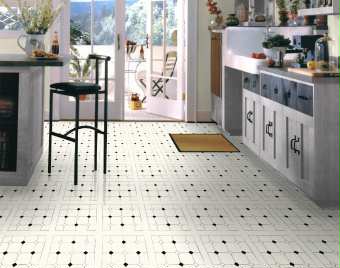
http://www.e-maildir.com/a-wide-variety-of-styles-of-flooring.html


The tile floor in this image is a great example of point.  Each little black tile on the floor represents a point.  The tile itself is not leading to a different location, it is simply representing a small spot on the flooring.  While the floor as a whole has many "points" that work together to make the design and move the eye across the room, the individual points stand alone.


Line
Line is the connection of two points with some sort of media, in the case of interiors, it's often the materials used to make furniture.  Therefore, lines move the eye from one place to another.  Different types of line evoke different emotions.  For example, a horizontal line represents peace and rest while a zig-zag line creates energy and lots of movement.  In Victorian style homes, curvy lines bring elegance and luxury to the interiors.
http://www.hgtv.com/decorating-basics/8-elegant-victorian-style-dining-room-designs/pictures/index.html
The curvy lines in the chandelier, chairs and windows help to add a more luxurious feel to the dining room while the horizontal lines of the tables and book case help to move the viewers eye down the length of the room.


Shape and Plane
Lines are generated from the connection of two points and shapes are generated from the connection of lines.  Planes are the "faces" of objects that are made of shapes.  Just like lines, different shapes bring a different feel to a room.  For example, a room filled with rectangular shapes feels more serious than a room of circular shapes.
http://www.hgtv.com/living-rooms/our-favorite-color-infused-living-rooms/pictures/index.html
  Because this living space is filled with lot of rectangular shapes, it has an organized and sophisticated feel to it.  It doesn't seem like a room where children run and play.  However, the addition of the two rounded seats and yellow vases break up the seriousness of the room.


Form and Mass
Mass refers to the density of an object, or in this case, the furniture.  Pieces that appear heavy in mass often fill the room much more than a piece that is hollow or smaller.  This is useful when trying to fill a large space on a budget or when trying to utilize a smaller space.
http://www.hgtv.com/decorating-basics/small-space-solutions-for-the-kitchen-and-living-room/pictures/index.html
In this small apartment, lightweight furniture adds space to the area.  The small table in the center provides lots of foot room underneath and the cabinet on the right appears to take up very little space with so much open space underneath.


Space and Volume
In layman terms, space the area of a room that is available to use.  There are two types of space, positive and negative space.  Positive space is where objects are placed and negative space is the empty areas around those objects.
http://www.hgtv.com/bathrooms/high-end-bathroom-tile-designs/pictures/index.html
 Space is utilized very well in this bathroom.  The counter tops, ottoman and bathtub take up positive space, but are surrounded by lots of negative, or empty, space.  Because the proportion of negative to positive space is fairly balanced, the room appears very spacious.


Color
Color is the most considered element when it comes to design.  The impact of color on a room can be tremendous.  Color is not merely just a red, blue, purple, etc, but consists of values, hues, intensity, and can transform a bland room into a cozy space or give a room the illusion of being very large.  Darker colors pull a room inward, making it appear smaller while lighter colors push the walls outward and expand the space.  A touch of vibrant color however will energize an area.
http://www.hgtv.com/bedrooms/tour-the-worlds-most-luxurious-bedrooms/pictures/index.html
The darker grey walls of this room give it the cozy feel many people desire in their bedrooms.  However, the accents of turquoise on the chair and pillow bring energy and brightness to the room.


Texture
Texture can affect an interior just as much as color can.  Different textures have different impacts on spaces.  Generally, smooth textures are make a room feel formal while rougher textures can feel casual.
http://www.hgtv.com/living-rooms/hot-design-styles-for-your-living-room/pictures/index.html
For example, the appearance of texture in the walls and floor in combination with the rugs and curtain add unique interest to the room.  However because the floor and walls are actually smooth, the room doesn't feel too overwhelmed with textures.


--God Bless,
     K